Thursday, 27 June 2013

A thumbs up for Emirates Airlines in Harare


A couple of months ago my friend in the news biz sent me a press release about  the Emirates Airlines Office in Harare. There was a contact name on the press release  which I pounced on with  the pent-up  energy  of someone with a gripe and I took the opportunity to send off a rant to Emirates. My rant went like this:

Dear Person Representing Large Corporation (name removed to protect the innocent!)

“Having read of the recently opened Emirates office in Harare I felt compelled to send you this short note on Emirates Airlines. By the way I live in Dubai.

The observations and impressions of  several people  I know who travel frequently on Emirates Airlines and who have used the Zimbabwe and South African route is that customers on these routes receive poor quality service - mainly in the form of old planes and old in-flight services.  It is a shame that Africa is once again treated like the poor relation and given inferior treatment.

Of course customers, me included, will all continue to use Emirates because at least we can get direct flights but what a sour taste it leaves in one’s  mouth.”

I received a reply back very promptly. I totally meant to get back to Emirates Airlines but, and here I have to hang my head in Shame, I went off on a giddy round of travel and having fun and time passed…. Then I tidied up my email ,as I do- believe it or not, and found the unanswered email. Embarrassment, as much as anything, had me jumping around to fix things up.
 
I am sure, by now, you are all dying to know what Emirates had to say so here it is:

”Hi Penny,

Many thanks for your email.

Sorry to hear that your experience has not been up to expectation.

I have passed your email on to the Emirates Country Manager for Zimbabwe.

Emirates introduced a Boeing 777-300 on the Dubai-Harare route from February 1 this year that increases its capacity on the route by 50 percent. The aircraft has 354 seats in a three-class configuration, offering eight luxurious First Class suites, 42 seats in Business Class and generous space for 304 passengers in Economy Class.

Throughout the aircraft, passengers will be able to experience the airline’s award-winning ice in-flight entertainment system with a choice of over 1,400 channels on-demand as well as meals prepared by gourmet chefs.

I wonder if there is some way we can enlist the support of your blog in helping to address the perceptions you mention.”

I am sure those of you who have travelled more recently can confirm these statements and take me to task for my outdated rant. I was impressed with Emirates for responding at all. I was rather disturbed to find out that they knew that I have a blog. And promptly went off and “googled” myself to see what would come up. Once you blog you are no longer anonymous. Which, of course, should be obvious. But ho hum what can I say I did not think of the obvious.

Which brings me to the point that having complained at Emirates airlines and the Airline responding so promptly and so well, I absolutely have to give them a plug:
 
By the way the airline has been busy  winning awards all over the place: ‘World’s Best Airline, ‘Best Middle East Airline’ and for a record ninth year in a row, ‘World’s Best Inflight Entertainment’. 

For those of you that absolutely have to visit Dubai  (or as I like to say Do Buy) for a stop-over on your way to and from the Southern Hemisphere ( and I am not forgiving any of you that are off to the Reps Reunion in the United Kingdom and not stopping over even though you could probably say the same thing to me about not being at the reunion) remember it is the Dubai Summer Suprises Time of the Year and there are all sorts of deals with Emirates Special Offers:
 
Here is a super deal for Business Class travellers:

Explore the World in Style for less with Emirates’ Three-Day Business Class Sale

Fares starting from US$2,550 for travel from Harare to Dubai.

HARARE, ZIMBABWE, June 4, 2013 – Travellers from Zimbabwe are being offered a taste of the highlife with the latest discounts from Emirates in a three-day sale of Business Class tickets this week.

Attractive discounts are being offered on the airline’s Business Class fares to selected destinations starting from June 4 until June 6, with ticket prices starting from US$2,550 for return travel from Harare to Dubai.

Travel is for the period July 12 and August 4 and passengers from Zimbabwe will be able to travel Business Class to London from US$3,140 return or Geneva from US$3,485. A return trip to Paris will cost US$3,985 and Tunis is US$4,070. The fare to New York is US$5,860.

When it comes to Business Class, Emirates goes to great lengths to ensure comfort, efficiency and attention to detail for our passengers. 

On the ground, Business Class customers and Gold card members of Skywards, Emirates’ award-winning frequent flyer programme, can relax before their flights in one of Emirates’ 35 global Business Class lounges, including the world’s largest Business Class lounge located in Concourse A in Terminal 3, Dubai International Airport. Opened in January this year and spanning over 16,000 square metres, the lounge features: showcase kitchens, business centres, fully stocked bars and restaurants, a Timeless Spa with 29 treatment rooms and an entertainment zone.

Onboard, Emirates’ award-winning Business Class offers passengers state-of-the art seats with fully connected inflight communications and entertainment. A highlight is its renowned ice inflight entertainment system which offers passengers up to 1,400 channels of the latest multi-lingual entertainment and has been voted the world’s best at the World Airline Awards for eight consecutive years.

Emirates’ in-flight dining options frequently exceed passengers’ expectations, offering a choice of regionally inspired menus created by award-winning chefs accompanied by some of the world’s finest beverages.

In addition, Emirates’ Business Class passengers can enjoy:

·         Complimentary chauffeur-drive service to and from selected airports;

·         Dedicated Business Class check-in desks;

·         Priority baggage handling;

·         Fast track immigration on arrival and departure from Dubai.

To book your next trip and experience Emirates’ Business Class for yourself, please visit the Emirates sales office at Wakefield Road, Avondale, Harare, book online at www.emirates.com or speak to your travel agent.


Saturday, 22 June 2013

FooDivas review of Simsim


26th April our visit to Simsim
A couple of months ago, when  the weather was still what I consider to be civilized, Bryan and I had a yummy outdoor breakfast at a new Palestinian Restaurant on the JBR walk. Simsim.

I am so glad that FooDiva has reviewed it. She is a bona fide foodie blogger who knows what she is writing about. So have a read. And of course, go and have a meal there.

FooDivas review of simsim

Thursday, 20 June 2013

A Midsummer Night's Dream - Now and Then


Bryan and I went to the theatre last Saturday and watched  A Midsummer Night’s Dream. A good way to round off  a weekend don’t you think? And before it is too late, I must get this blogged  and urge you to get down to the theatre NOW to see the show.


Bottom and Titania and fairies


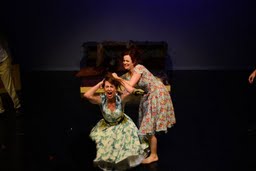
Helena and Hermia                 Demitrius and Lysander

A bit of Then
Forgive me for a moment as I meander for a bit into the past. Many, many, years ago (in 1985) Bryan landed the role of  Demetrius in the Harare Reps production of the play. Around that time I was officially upgraded from "not knowing what the hell was the deal" to being Bryan’s Girlfriend, or was it the other way around...? As a consequence I was keeping a beady hawk  eye on any and all  potential competition. In this instance  Trish Townley and Debbie Brinkworth who played  Helena and Hermia ( I can’t remember who played who)  lest my recently landed quarry  (Bryan) be snatched out from under me by one of these vivacious and  rather lovely young ladies. We are all still  friends. As it happened Helena married Oberon. I  have a  few odd looking pictures taken back stage. I still remember Tony Gaynor playing Bottom in a stunning, milked for all its worth performance. But that was then  - so back to the here and now.
Bryan and Tony Gaynor and Vince Gray and Debbie Brinkworth (1985)
Bloody rude mechanicals, Alan Parky and Bryan ( 1985)
Here and Now
This show got off to an original start  with the audience being  serenaded   by Theseus’ silver tongue and a charming supportive Hippolyta. If you go, listen to the words the cheeky man is singing……. The set was littered with players casually and quietly  going about their business. All this as the audience entered the theatre and found seats. At the call of “beginners on stage” from somewhere in the depths of beyond the actors removed themselves from the set and we were ready to go. What a  lovely start to the evening.
I loved the costumes - what a great idea, they worked so well. Sort of 1950’s  with a twist of picnic Boho chic (?). Waistcoats and handkerchiefs and layers of stiff petticoats under lovely darted and pleated dresses. Just charming. I loved the use of flats for Hermia and high daddy long legs heels for Helena to emphasis the height difference - so apt and well done. Hair and make-up full marks. From the dapper costumes of Theseus ( loved the cravat) and Egeus to the chic and suavely dressed Hippolyta to the  slinky Titania and the rustic “rude mechanicals” the costumes were a delight. Once again Dubai Drama Group have not let us know who to attribute the costumes to. I think  the identity of their consume person is a closely guarded secret.  Whoever you are good job done.
The idea of crates stacked up for the set  was inspired, I thought. What a great idea to have  a crate concept for a Theatre Group that does not have a home base where your set could be part of your storage and changed for each production. I was off on a day dream of  ideas of what I thought would be done in the this play and this space and was so looking forward to seeing my imaginings come to life. Hummmm the set was not utilised nearly enough. So much more could have been done with the boxes. I did, of course, love the conversion of box to boudoir for Titania. That was lovely. I would have liked to see our actors draped over the boxes more. No matter, it did not detract from the show. I just think the blocking was, for the main, part uninspired. There were too many straight lines. I also did not like the actors in the last scene sitting as the audience with their backs  to us - the actual audience. I get what the idea was but I really did not like it. As an audience member I  want to see the faces of the actors who are on stage most of the time and staring at the back of heads is not okay by me.
The mood lighting was lovely and soft. I liked that. The moon needed a bit of work. It did not move or change in brightness  at all. Again not a big deal but I did notice.
In this production I would say that the ladies stole the show. Whilst everyone gave credible performances the gals charmed me. Brooke Butterworth (as Titania) giving a delightfully physical performance throughout and here I have to highlight her seduction scene ( if I may call it that) with Ciaran Mulhern  as Bottom. All that cooing and shoe removing and flinging was charming. Just the right amount of innuendo, stroking and pause.  
Jennifer Cooper took what I have always found to be a bit of an annoying character, somewhat lacking in empathetic value and turned Helena into a quirkily delightful  and sympathetic part. Her performance was charmingly gauche. All long legs and messy and oh so funny.  Olivia Middleton’s Hermia was a delightful counter point to Helena -these two ladies were a super duper treat to watch.   
I have to say something here for the fairies. All of the actresses playing the fairies had such lovely expressions and they were hidden behind the puppets most of the time. What a complete waste of their talent. The puppets added nothing to the production. A case of a good idea in the wrong show.
The cast of characters for the “play within a play” were just right and  Hani Yakan  with his 5 o’clock shadowed beard and manly brow was an incongruous and comic Thisbe. The matching of ironic physical traits  to characters was thoughtfully cast.  The groups worked well together and were a pleasure to watch. Zain Sheikh was a delight  with his impish, cheeky and confident Puck.
I am going to get shouted at now. Whilst there was nothing wrong with the performances of our romantic leading men I felt them to be a bit lacking in presence. Having watched Cliff Single perform in other shows I know that he is more than capable of delivering a full hearted, vigorous performance. Somehow the romantic men ( with the exception of Erik Hadden)  fell a bit flat and I cannot understand why. All the ingredients were there. The men needed to own the stage a bit more. They needed to square up and stride a bit  - this is after all Shakespeare. Ben Franklin gave us a taste of physical energy when Demetrius was tussling with Lysander.  I think what could have helped may have been  a bit more of  Shakespearean use of addressing the audience. This was done occasionally and well. I think that Midsummer Nights Dream in particular lends itself to this and it would have been useful to take advantage of the tool a bit more.
Overall the casting and acting was good which meant that we ,the audience, had the opportunity to relax and enjoy the show. This combined with  the great costumes and the best material  ( it is Shakespeare and he is the master after all) made our Saturday night entertainment just grand.


 The Beautiful (?) Thisbe

A great big warm congratulations to the Dubai Drama Group for a really lovely evening of good theatre. I enjoyed everything from the introduction as the audience walked into the auditorium to the curtain call. I love a  curtain call. It just ends the entertainment properly in a just so manner.

There are shows this weekend. Hurry, hurry, hurry. Last chances to see the show and it is worth it. You will enjoy yourselves.

Links

Dubai Drama Group

Ductac

Ticketing Information from Ductac:

presented by Dubai Drama Group, in association with Emirates NBD
June 14-15 and 21-22
Evenings 8.00pm, Saturday Matinees 4.30pm
Love looks not with the eyes, but with the mind
Venue: Kilachand Studio Theatre
DUCTAC, Mall of the Emirates
Tickets: AED 80
Free seating
Tickets now available at DUCTAC's box office and timeouttickets.com

Tuesday, 11 June 2013

Switch - The Movie. Another Trailer and Bryan Speaks - Yeee Haaaaa

Bryan Mack. International Bad Ass

In June of last year I blogged about Bryan acting in a Chinese Movie:  Bryan in the trailer for switch

It seems it is being released in 3D this year and my Main Man Bryan is again in the trailer. This time he actually speaks. It is a bit worrying ( Bryan speaking that is) as I was under the impression that he was going to be dubbed. So here he is  - not dubbed. Don't blink......

 
If the  above link does not work try this one: Switch Trailer #2

Tuesday, 4 June 2013

Looking back 25 years - Wedding reflections

Bryan and I celebrated 25 years of wedded Bliss recently. Where did that saying come from? I am not complaining about our time together but really who on God’s Green Earth can possibly have 25 years of Bliss? I always think of bubble bath when I think of Bliss, can’t take that word seriously at all. But my mind wanders.
Sophia, me and Julie

We were legally married a few weeks before our "Wedding Day". Something to do with the fact that Father Basil, the lovely Greek priest that married us, was not an official marriage officer in Zimbabwe. I think there may have been a language barrier involved in the passing of the written whatever it is that you write to resister as a marriage officer with the Zimbabwe courts. So on the 17th March (St Patrick’s Day, not that we knew that at the time) Bryan and I toddled off to the Magistrates Courts in Harare to get hitched. We did not want to spoil the wedding which was set for the 30th April so we decided that we would go alone and not make too much of the event. The staff at the wedding registry office were not impressed with us when they discovered that:-
1. We were not in our glad rags for the event.
2. We asked how long we had to wait and how long the actual getting married bit would take as we had to get back to work.
3. We did not have any witnesses with us and they were even more displeased that they had to round up a couple of government workers to act as witnesses to our marriage. Tea time was looming and finding two people willing to abandon their break was not easy.

Even the Marriage Officer was unhappy. Before he performed the wedding ceremony he gave us a rather long lecture about what a serious thing this marrying business was. For a moment or two or three during the set down I wondered if we would be allowed to marry at all, having clearly not shown the proper reverence and gravity the occasion demanded. I think the fact that we were rather young did not help our cause. Anyway after being thoroughly chastised we were "allowed" to be  married.
 Rob and Bryan - note best man Robs black eye courtesy of Bryan during a squash game... GRNNNNNN
 
At the time Bryan and I were involved in a Harare Reps Production probably one of the Calling Shows. We mentioned in passing (as you do) that we were “off to tie the knot” to the cast and crew. They had a whip around and presented us with a bag of money “to pay for a wedding breakfast”. Did you notice that I said “a bag of money”? The horrors collected COINS. We were given strict instructions that we could not change the coins for notes and that we had to pay for our breakfast with the coins from the bag. Picture if you can two young newlyweds paying for their wolfed down wedding breakfast (remember we had to get back to work) in the terribly smart (in those days) Harare Sheraton with a grubby cloth Standard Bank banking bag (remember those?) filled with coins.  
With the Parents
Fast forward a few weeks and we had our lovely wedding at the Harare Greek Orthodox Church, mainly because they would have us. Bryan and my's religious devotions are lacklustre at best and the high minded Anglican Church was well aware of our lack of piety because of my parents’ long involvement with the church. I can just imagine various church groups praying for our dammed souls for years, sorry Mum - only teasing. Anyway, unsurprising, they said no way were they going to marry a couple of heathens like us. We could have gone on bended knee to another Church (that I will not name for fear of being struck down) who it seems would marry just about anyone (that would be almost everyone that we knew and loved) who was prepared to attend a series of pre-marriage guidance sessions and then wade through the most agonising service where women were told to submit to their husbands (and not wear the pants in the marriage) and husbands were told to treat their wife with respect as God had entrusted the wives to the care of the husbands - or words to that effect. You can't see me doing that without a fight can you? Now the Greek Church took a more philosophical and long term view and figured that they were undertaking a community service and our straying ways would most likely be mended further down the line (I am half Greek after all ,and all those years of tradition would, they assumed, win out) and our children (with any luck) would be good Greek Orthodox devotees. I am also pretty sure my lovely Aunt Tass was a wonderful and convincing envoy when she petitioned father Basil to marry us. Once that was done and dusted, the talented Anna Dalmitis who was designing my wedding getup had to talk Father Basil into allowing me and the bridesmaids to wear trousers for the service. Something he had no problem with, but there again I am sure Anna was a skilled negotiator on my behalf. I do wonder if my insistence on wearing trousers was somehow a subconscious cock a snoot at that dreadful Presbyterian priest and the horrid speech that he churned out at more weddings than I care to remember with him officiating. Oh the price we all pay for a church wedding!
With our lovely Grandparents


 Of all the churches in Harare (I might be a bit biased here) the Greek Orthodox Church is just the most beautiful. I spend many an hour as a child inside that church gazing at the artworks in awed wonder. In between standing up and sitting down as you do in church, and scratching at arms and legs and neck because of horrid articles of appropriate church going clothing, I made up all sorts of stories about the saints on the wooden panel that separates the nave from the sanctuary. I spent happy hours day dreaming about St George Slaying the Dragon. I would gaze fondly at the angels and cherubs and feel all warm and fuzzy at their loveliness and quiver with fear at the beautiful sad pictures that Helen Lieros had lovingly and devotedly painted on the walls of the Church. I never ever thought I would get married in the church. Looking back I am so glad that we did. The memories of my childhood, our wedding, our sons’ christenings, my father's funeral, and all manner of other family events that are observed through the rites of the church are so very precious to me, especially now that I am so far away.  The memories of all those rituals are so comforting.
The Greeks do weddings in the most wonderfully symbolic way. The ceremony has a charming, old world, bygone era; incense filled, feel to it and in Harare is conducted entirely in Greek. There is a lot of doing things in three’s. There are symbolic candles and ribbons and crowns. Our wedding crowns were the same as those used by my Grandmother at her wedding, they were delicate and beautiful. Here is a bit of info on what a Greek wedding is all about.


Interior shot of the Harare Greek Orthadox church - pinched off the Cephalanian and Ithaka facebook page

Bryan’s mum Cecily was roped into arranging flowers. I remember that she and she friends were entrenched the day before the wedding in the carport of my parents’ home. The driveway was littered with delivery vans and ladies nattering away arranging beautiful mounds of flowers.  Whilst writing this I could not remember who was with Cecily helping her so I gave her a call and asked what the scoop had been on the flower front. Cecily told me that I had insisted that I wanted vlei flowers so my poor mother-in-law and her probably reluctant friends drove into the bush and robbed nature of several acres of its bounty so that I could have natural flowers and grasses.  What was I thinking, making my poor future mum-in-law do that? I am, of course, very glad that she did.  My memory is of Cecily and her “all for one and one for all” chums being a delightful back drop to the mundane job of wedding setups with their busy creative industry and warm chatter. Half way through the afternoon a pick up arrived with a delivery of protea flowers from the farming community of Headlands (thanks Debbie). That was a totally unexpected and a delightful surprise that added to the stock of flowers arranged.
Bryan says I galloped down the aisle dragging my poor father along in my rush to get to the alter. I think that is a little unkind of him and I do not believe him. He recovered from that statement by saying that my eyes shone like the stars. How sweet is that?
 
After the service a Reps friend took Bryan aside and cautions him saying that there was a very strong likelihood that Bryan had just been signed up for a few years of hard labour on a Greek oil tanker. But who knows as it was all in Greek and he can't have been right as here we are twenty five years later and no one was conscripted on to a ship.

The Wedding reception was in my parents garden- my mother spend a frantic few months arranging petty much everything. My mother was confident that at the end of April we would be absolutely rain free - so we did not bother with Marquees. It rained the day before the wedding. All over the  chairs and tables. A great deal of teeth gnashing ensued. I have noticed from that day on that around our wedding anniversary it rains every sodding year in Harare. On the day (whew)  the sun came out. I sat in the garden waiting to go to the Church soaking in the early morning crispness wondering what Bryan was doing.

I loved that our reception was at home in the Garden. I loved that my Greek relatives all brought lovely Greek food. I was thrilled that that we had a haggis, which, to be honest I did not try. From Cecily's flowers to Amos Caspi acting as our Chauffeur in his Rolls Royce it all I meant the world to me that almost everything that was arranged was done by a friend or a family member. My memories of our wedding are tied up in the togetherness of it all. I sat with family for hours hand drawings the covers of our invitations. We sliced our cake with a ceremonial sword that belonged to a dear family friend - Costa Hiatas.

There were speeches made, and toasts  drunk. It was a day, naturally, of special  memories created.


Done and Dusted
 
Twenty five years of being married to one person is not something to be sneezed at. We have, surprisingly, achieved this milestone in relative calm. I can honestly say that I can count on one hand the number of time that we have fought in that time. Most likely because I am a past master at passive aggressive sulks and Bryan does not fight. A recipe for bliss? Well, maybe. When Bryan asked me to marry him (that is once I realized that he was proposing to me, which took a bit of time) I remember looking at him and thinking “Yes, I can see myself sitting opposite this person at the breakfast table when I am seventy.” Wild romantic that I am. Honestly only the young can be so arrogantly confident. I mean how do you know at that age that you can bear to spend that much time with someone? Regardless, I thought I could, Bryan must have thought he could because he proposed in the first place, and somehow we have made it this far. How young and stupid we were and how lucky we have been.
Pop open the bubbly- Then

And now toasting 25 years

Bryan and I have a friend, Jerome O’Brian, who made a speech at our wedding - Bryan did the same at his. We have know each other since our teens. Jerome is clear of thought and wise and recently he blogged a gem on the nature of love.  Now, as you know I am not one to go all dewy eyed about biblical verses being quoted but that is Jerome’s stock in trade and he is pretty good at it. All wonderfully high minded. I do think though, that  if you try and remember the high minded stuff, the on the ground bits work.

I have linked this here  :Jerome's Jottings - Love

Or you can read it below:

Love is ….?

by jeromeobrien

pololdheader

So now I am giving you a new commandment: Love each other. Just as I have loved you, you should love each other. Your love for one another will prove to the world that you are my disciples.” (John 13: 34 – 35)
I have been hearing this word ‘love’ bandied about with ill regard and thought over the past few weeks. Here is one serious definition as to what love is that has recently been offered to me:
“Love is being stunned by the identity of the other, by the strength of feeling, by the realisation that this is not something one has chosen to do or feel. Sheer givenness and sheer providence.”
Sheer coprolite, more likely.
At best this description is infatuation; at worst, it is pure licence. Whatever it is, it is not love
Here is what love is, and, pleasingly, it comes from the book of love:
Love is patient and kind. Love is not jealous or boastful or proud or rude. It does not demand its own way. It is not irritable, and it keeps no record of being wronged. It does not rejoice about injustice but rejoices whenever the truth wins out. Love never gives up, never loses faith, is always hopeful, and endures through every circumstance. (1 Corinthians 13: 4 – 7)
For me, this kind of love can be epitomized little better than in the story that Jesus told of the Prodigal, or lost, son (Luke 15: 11 – 32). It is such a well known story, and it is a story of the true meaning of love. In this story, the younger son is loveless: he is arrogant, impatient (“I want it now. Now is the opportune time!”), selfish, overfed, unconcerned, grasping and independent.
So, too, is the older brother in the story. He is a loveless man: arrogant, boastful, proud, selfish, greedy, jealous and angry.
In the face of this onslaught of lovelessness, the amazing thing is that father chooses to be loving: deliberately, decisively, determinedly chooses to be loving. This is not an emotional matter, it is not an instinct and there is no ‘being stunned’ by anything. It is his choice. He meets all the criteria that Paul wrote to the Corinthian Church about when he reminded them of what love is. The father in the story is patient with both sons; he is kind, generous and giving to them equally; he is selfless and self giving; he keeps no record of wrongs and abandons his claim to rights. He never gives up and he perseveres with them equally: with the one, he waits; with the other, he goes to him. He works hard to keep them in relationship and this is what love is. I am convinced that this is the kind of love Jesus was talking about when He said, “As I have loved you …”
The miracle and beauty of the story is not the father and son’s reunion, but is the fact that the prodigal discovers love. As Jesus said, “He came to his senses”. He sheds his pride and arrogance, humbles himself, abandons his claim to rights and entitlements, and is ready to serve and be in relationship again.
That encounter that takes place on the road, then, is not love. It is the result of love. Yes, that encounter is one of deep emotion and outpouring of sentiment, and that is good stuff, but it is the culmination of love that has already been at work. The hard graft, the deliberate choices and decisions that the father has made, represents true love that makes the encounter possible, and the emotions which follow it.
With the older son, however, there is great doubt whether he will ever change his loveless ways.
So let’s hear it for the forgiving father and the returned son.
But not so quick.
Jesus told His followers that this was the way that He loved them, then He said, “In the same way, you must love one another”. Patience, forgiveness, generosity, selflessness, humility, kindness and perseverance. This is what love is.


Sunday, 2 June 2013

Bart Wolffe - A broken trust.

 My friend Bart writes beautiful poems.
 
Bart Wolffe
 

He also paints, acts, writes plays. He is, in short, a Talent.
Bart Wolffe's Victoria Falls
 
A BROKEN TRUST
Saying goodbye
Doesn’t make sense to dogs;
No way to tell them
Your wife does not love you any more
Or
That you have to leave because of civil war.
(There is a crime in abandoning a dream,
Its end betrayal.)
The death sentence for a canine friend with cancer,
The question “Why?”
Silenced in their eyes
By a lethal injection.
You watch your best friend die.
There is a look of incomprehension,
A stone that is sorrow
Sits heavy in the throat,
Its weight unpronounceable.
(The end of innocence
That moment trust is lost.)
It has happened more than once,
A door closes
And through the fence
You try to touch them one last time
To explain –
But there are no words
So you turn and walk away.
Only a sense of guilt remains.
After all, it was you who gave them familiar names
That you will always remember…

You can buy his work here www.lulu.com


Tuesday, 28 May 2013

Breaking the Silence - Oppression, Fear, and Courage in Zimbabwe by Alexandra Fuller for The National Geographic


A far flung friend (as a Zimbabwean  and an expat that is the way of friends) sent me an interesting article related to Zimbabwe recently. I will share.
 

Picture by Robin Hammond in the National Geographic
 
Zimbos out there will be familiar with Alexandra Fuller  as the author of "Don't Lets Go To the Dogs Tonight", "Scribbling the Cat " and "Cocktail Hour under the Tree of Forgetfulness". She has recently written a beautifully observant and well crafted article for "The National Geographic" linked here and shown below. The pictures that come with the article were taken by Robin Hammond. They are breathtaking in their loveliness and sadness.

Read and weep.
 
Breaking the Silence - Oppression, Fear, and Courage in Zimbabwe
 

 There are at least two things to know about Zimbabweans. The first is that they have an immoderate attachment to their land, and no wonder. Anyone who has seen the spring-red blush of musasa woodland at the beginning of the rains, or felt the crackle-hot wind of a lowveld summer afternoon, or absorbed the scents of sweet potato and marigold as dusk settles over the bush will know that theirs is a soul-snagging land. Of course such an attachment to land comes at a price. For it, and over it, there will be wars and revolutions, and the inevitable loss of land by the vanquished or the politically unlucky will be so unendurable that the unmoored people will end up true ghosts, souls in search of soil.

The second thing to know about Zimbabweans is that they are a small but persistently noisy nation of storytellers and musicmakers. The Bhundu Boys were pop diva Madonna's supporting act at Wembley Stadium in London in 1987. Thomas Mapfumo, the Lion of Zimbabwe, created a genre of protest music-chimurenga (uprising). Africa's most prestigious literary award, the Caine Prize, has twice gone to Zimbabweans in its 13-year history (Brian Chikwava in 2004, NoViolet Bulawayo in 2011). Charles Mungoshi won two Pen International awards in 1976, and Dambudzo Marechera won the Guardian Fiction Prize in 1979. Doris Lessing, who spent her formative years in the country, won the Nobel Prize in literature.

I am not now Zimbabwean, but for several years in the 1970s my British-born parents owned a farm on the eastern edge of what was then the rogue state of Rhodesia. They fought-my father as a conscripted soldier, my mother as a police volunteer-to keep the country white-run and avowedly out of the hands of communists. By any calculation, it was a questionable cause: Ian Smith, Rhodesia's prime minister, campaigned in 1965 on a slogan of "A whiter, brighter Rhodesia," and for the next decade and a half a decreasing minority of whites (just over 200,000 in the early '60s to about 150,000 in 1980) tried to hold on to power in a country populated by a black majority that grew from about 3.5 million to more than 7 million during that period.

By late 1979 liberation forces were coming into Rhodesia from camps in neighboring Mozambique and Zambia faster than government troops could kill them. A peace was negotiated. The following February general elections were held and won by the Zimbabwe African National Union-Patriotic Front (ZANU-PF). Its leader became Zimbabwe's first prime minister. Robert Gabriel Mugabe exuded an air of conciliatory magnanimity. My mother wasn't buying it. My parents moved north to Malawi.

Working along fault lines well established by the white minority government before him-which is to say, ethnic, racial, and political-Mugabe went about further dividing his nation and securing absolute power for himself.

There are two main ethnic groups in Zimbabwe: the majority Shona and the minority Ndebele. Mugabe is Shona. In 1983 Mugabe deployed his North Korean-trained Five Brigade into the west of the country to preempt any Ndebele political opposition. Over the following five years, an estimated 20,000 Ndebele were massacred. "He understood and manipulated our weaknesses very well," Wilfred Mhanda, a former ZANU-PF liberation commander who fought along with Mugabe, told me. "There is nothing more deadly than someone so profoundly insecure mimicking the aggression of his oppressors and becoming an oppressor in turn."

Mugabe tolerated corruption in his cabinet, as long as it came with loyalty to him. The country's economy was collapsing, and by the mid-1990s there were fuel shortages, civil servants were striking, and liberation war veterans began to demand the compensation they had been promised at independence. Then, in 1998, Mugabe sent troops into the Democratic Republic of the Congo to prop up the teetering regime of Laurent Kabila, at an eventual cost equivalent to a million U.S. dollars a day. Zimbabwe's economic fate was sealed.

The Movement for Democratic Change (MDC) was launched in 1999, headed by a former labor union leader, Morgan Tsvangirai. Mugabe countered the new political outspokenness this came with and the increasing dissatisfaction among his own supporters by allowing them to appropriate white-owned commercial farms without compensation. In 2000, with Mugabe's explicit blessing, unemployed ZANU-PF supporters led by war veterans armed with axes and machetes invaded the farms, shouting, "Hondo! War!" Domestic food supplies plummeted. In 2005, after the MDC won several parliamentary seats, Mugabe retaliated with Operation Murambatsvina (Operation Clear the Filth). Across the country market stalls and homes belonging to the urban poor, who constituted much of ZANU-PF's opposition, were razed. An estimated 700,000 people lost their homes or livelihoods, and more than 2 million were driven further into poverty.

Then, in a first round of elections held in 2008, Mugabe's ZANU-PF finally lost to Tsvangirai's MDC. Calling for a runoff election, supporters and officials of ZANU-PF went on a vicious state-sponsored rampage. Hundreds of MDC supporters were killed and thousands injured, hundreds of women and girls were raped, and tens of thousands of people became internal refugees. "If you wanted to commit suicide in 2008, you just wore an MDC T-shirt," I was told. By November of that year, Steve Hanke, an economics professor at Johns Hopkins University in Baltimore, had calculated Zimbabwe's monthly inflation rate at 79.6 billion percent, second only to Hungary's in 1946.

To avoid worse bloodletting and even more unimaginable economic collapse, Tsvangirai withdrew from the race, and Mugabe declared himself the winner. Thabo Mbeki, then president of South Africa and a bafflingly uncritical Mugabe supporter, persuaded the two men to negotiate a power-sharing agreement. Mugabe retained control of the mines, the army, and the police and intelligence services-in other words, everything that ensured his continued dominance. Tsvangirai inherited the ministries of finance, education, health, environment-in other words, everything that ensured he couldn't run away with power.

A tenuous purgatory of waiting ensued-waiting for Mugabe's grip on power to ease, waiting for Mugabe to die (he was born in 1924). But in spite of rumored puffy ankles-cancer was one of the whispered speculations-Mugabe appeared as robust as ever. In 2010 Foreign Policy magazine named Mugabe the second worst dictator in the world, after North Korea's late leader Kim Jong Il. In 2012 the Washington, D.C.-based nonprofit organization the Fund for Peace ranked Zimbabwe fifth in its annual Failed States Index.

Still, when I arrived in the country in mid-October 2012, things in the capital, Harare, seemed to be business as usual. An influx of diamond money-the 2006 discovery of diamonds in the east of the country has been called the biggest find of its kind-had lent a Botoxed sheen to the place: adoption of the U.S. dollar had simplified trade, new cars were on the roads, shops were full of South African imports, mansions mushroomed behind massive walls in the suburbs beyond State House.

But beneath the impression of regularity, disquiet remained. Ahead of tentatively scheduled elections in July 2013, ZANU-PF youth gangs were stirring in densely populated market centers; on international television ZANU-PF officials were blatantly threatening that they would not support a Tsvangirai win. At the same time headlines reported Tsvangirai's domestic intrigues, culminating in his recent marriage to Elizabeth Macheka, daughter of a ZANU-PF central committee guru. His position as a robust alternative to Mugabe seemed in question.

Meanwhile personnel from the Central Intelligence Organisation (CIO) were reportedly monitoring citizens' activities everywhere. "Yes, there are people who say I should watch out," Tafadzwa Muzondo, a 33-year-old Zimbabwean playwright told me. "But I have to do my duty. I am a citizen first. I am an artist second. And isn't it better to say at the end of your life that you tried to make a difference?" Muzondo had suggested we meet behind the National Gallery in the Harare Gardens. It was a steamy morning, and thunderstorms threatened, but we stayed out in the open, the better to spot any government-sponsored eavesdroppers, although I didn't see how a dried-up patch of lawn was going to do much to protect us against the CIO. But Muzondo had written a play that had provoked the government, and he was talking to a foreign writer, and to do either of those things in this place and at this time was to court trouble.

A concerned person can't help but keep track: In the decade from 2001 to 2011 official oppression has forced at least 49 Zimbabwean journalists into exile, the fifth worst record in the world. Within Zimbabwe's borders, scores of national and a few international human-rights activists, writers, and photographers have been intimidated or arrested, and one local cameraman, suspected of passing photographs of a beaten-up Morgan Tsvangirai to foreign media, was murdered in 2007. Since 2000 Tsvangirai has been arrested numerous times and once nearly beaten to death by Mugabe's henchmen. In theory, freedom of speech is protected. In practice, a series of imaginatively broad laws attempt to ensure silence. Regardless of when or how Mugabe leaves power, it's going to take his country a long time to recover from him.

"How do we intend to solve our violent history if we can't talk about it?" Muzondo asked. "You combine my poverty with my fear, with my silence-life is not worth living. They might as well just do mass killing." Zimbabweans are in the fearful position of watching themselves become the unspoken, the unheard-the mute, whose stories will be told only by foreign correspondents and Western aid workers. Once boasting the highest literacy rate in Africa-more than 90 percent-some predict that Zimbabwe's literacy rate will fall to 75 percent by 2020.

"We know this. Without our voice, we have no choice," Muzondo said. "Without choice, where are we? We're forever stuck in violence."

But Zimbabwean writers, artists, and playwrights haven't given up yet. Robust, sometimes mordantly funny, politically controversial novels, art exhibitions, and plays appear faster than CIO agents can object to them. In the past eight years Muzondo has written half a dozen plays dealing with pressing social and political issues. His latest-No Voice, No Choice-was banned in August 2012 after an enthusiastically received run around the country. "People were coming up to us afterwards and saying, 'We were scared of what would happen to us if someone noticed us watching your play, but then we noticed you were not scared of performing it. We felt more courageous because of your bravery.'"

The letter from the national authorities banning the play was Orwellian in its nonsensical doublespeak: "Please be advised that the Board of Censors read your Play Script and observed that the play is about discouraging youths participating in political violence ... The play is inciteful and against the spirit of national healing." I turned the letter over, as if shaking up its words would make it more coherent, to say nothing of rectifying the unintentional pun (inciteful/insightful). "Someone felt uncomfortable with the truth," Muzondo said. "But that truth is this: We're all in this together. Neighbors have assaulted neighbors. Now we have to sit down together and face what it is we've done to one another. The government doesn't want us to have that conversation. But what if we did?"

This was never part of the political calculation. Eventually Zimbabweans might be brought together by their common bond of suffering and begin to insist on their own liberation. In fact, Mugabe seems to have deliberately turned so many ordinary Zimbabweans-soldiers and police officers, obviously, but also schoolboys ordered out of their classrooms to rape and torture-into perpetrators that there is now widespread fear a change of government might bring with it recrimination. "Victims of the political violence are afraid it will resurface with every election; perpetrators of the political violence are afraid it will end," Rutendo Munengami, an advocate for victims of rape, told me. "Everyone knows who the culprits are; they are our neighbors and officials. They are not hard to find. Those people are afraid of a government who will call them to account."

I met Munengami and fellow activist Margaret Mazvarira in the garden of a quiet Harare restaurant a few mornings after my meeting with Muzondo. The sun appeared to take up the whole sky, and musasa tree pods cracked, showering seeds on the barely rain-softened earth. The two women spoke over each other, finishing each other's sentences, confirming the connecting braid of shared experience between them.

In the early hours of June 3, 2003, Munengami-whose husband was then an MDC councillor-was torn from her bed, her nursing nine-month-old son still in her arms. While soldiers looked on, Munengami told me, she was raped by a prominent ZANU-PF minister. Afterward, the minister drove her to a police station in Harare, where she and her son were dangled over a pit of acid while the soldiers decided whether or not to kill her. "They wanted to throw the baby to the ground," Munengami said. "They shouted, 'He will be the same as the father. He will want to give the country to the white man.'"

Mazvarira was abducted in 2000 from her home in Chivhu, a small town south of Harare, and raped by two ZANU-PF CIO officers after her 17-year-old daughter, an MDC organizer, was killed by a petrol bomb. Mazvarira contracted HIV from the assault. "They told me, 'You and your daughter are Tsvangirai's bitches.'" When Mazvarira went to the police station to report the attack, the officer in charge refused to hear her case. "The police are only ZANU-PF," she said.

The two women are not placid about what happened to them, but what converted them from victims into activists is that they were never able to hold their attackers to account. "The government won't help us. No one can help us. It is up to us, ourselves, now. That is where we are." In 2009 Munengami launched Doors of Hope, a nonprofit organization that supports and speaks for victims of politically motivated rape. Doors of Hope now has 375 members from all over the country. "We are standing for women," Munengami said. "Those so-called war vets raped so many women during the liberation struggle, but they don't want to talk about it. So we are going to talk about it. Whether it's 1975, or now, we don't want this to continue. We have had enough. We are sick and tired of being quiet. Where has silence got us?"

In a nearby jacaranda tree, the call of a cape turtle dove echoed Zimbabwe's eternal lament, "My mother is dead, my father is dead, all my relatives are dead." From my recent travels across the country, I knew that organizations like Doors of Hope existed all over Zimbabwe. I had spoken to the director of Radio Dialogue, a small station in Bulawayo that had circumvented a ban on independent broadcasting by distributing cassettes and CDs to minibus drivers. I had spoken to survivors of political torture who had organized healing circles with their erstwhile attackers and were now running a nonprofit, Tree of Life, which had gone into scores of communities throughout the country holding workshops to help both victims and perpetrators recover from past political violence. I had spoken to the editors of Weaver Press in Harare, which still published brave, politically sensitive books, and I had picked up copies of poetry published by amaBooks in Bulawayo. I had spoken to artists and writers and doctors who were challenging the inevitability of a silent, violent future.

"I am like that tree," Mazvarira said suddenly, pointing toward the jacaranda. "I've had my branches cut, but I am not dead. I am attached to this soil, and it feeds my roots." She pushed her plate away. "Today I got to tell my story. I was heard. That is my rain." She leaned forward with a smile of the kind that can come only when there is still hope in a nearly hopeless place. "So please tell your world not to turn the page on us yet. Tell them to keep hearing us. We are still speaking."